Italy: history in brief
The cradle of the Roman Empire and the Renaissance, and one of the countries with the most UNESCO World Heritage Sites.
Test yourself
Which came first?
History in brief
Ancient world Legend says Rome was founded in 753 BC. The small town grew into an empire ruling the whole Mediterranean; the Romans built roads, aqueducts and the Colosseum, opened in AD 80. In 79 Vesuvius buried Pompeii in ash.
Middle Ages After Rome fell, the peninsula split into city-states. Venice and Genoa became sea powers, Marco Polo reached China, Dante wrote the Divine Comedy, and the Renaissance began in 15th-century Florence.
Early modern & modern era Leonardo, Michelangelo and Raphael worked around 1500, and in 1609 Galileo turned his telescope to the sky. Opera and the piano were born in Italy, and in 1861 the country united as the Kingdom of Italy.
Contemporary era Fellini and neorealism made Italian cinema famous, the Vespa scooter and the Fiat 500 became national icons, and Italy won the football World Cup four times: 1934, 1938, 1982 and 2006.
Interesting facts
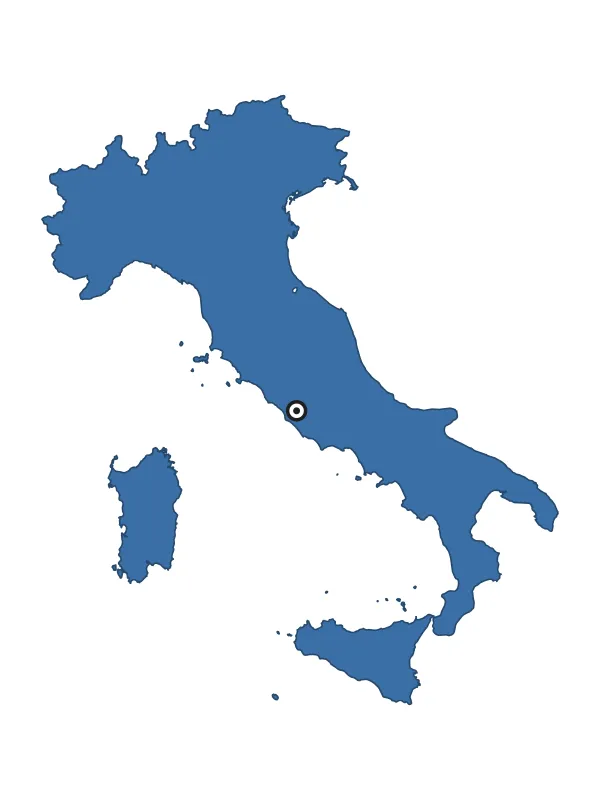
- Vatican City, the smallest country in the world, lies right inside Rome.
- The Leaning Tower of Pisa began to tilt during construction, which took almost 200 years, from 1173 to 1372.
- The word “bank” comes from the Italian banco, the bench where money changers sat.
- The University of Bologna, founded in 1088, is considered the oldest in Europe.
- Venice is built on 118 islands linked by about 400 bridges.
Key moments
- 753 BCFounding of RomeLegend says Romulus founded the city on 21 April, and Romans counted years from this date.
- 509 BCRoman Republic establishedThe Romans expelled King Tarquin the Proud and began electing two consuls every year.
- 279 BCPyrrhic victory at AsculumKing Pyrrhus of Epirus beat the Romans at such a cost that his name came to mean a victory not worth winning.
- 216 BCBattle of CannaeHannibal encircled and destroyed a huge Roman army; soldiers still study the battle today.
- 212 BCDeath of Archimedes at SyracuseThe great scientist was killed when the Romans took the city he had long defended with his machines.
- 100 BCBirth of Julius CaesarThe future dictator was born on 12 or 13 July into a noble but not wealthy family; July is named after him.
All dates (57)
Ancient world
- 753 BCFounding of RomeLegend says Romulus founded the city on 21 April, and Romans counted years from this date.
- 734 BCFounding of SyracuseSettlers from Corinth founded a city on Sicily that became one of the greatest in the Greek world.
- 509 BCRoman Republic establishedThe Romans expelled King Tarquin the Proud and began electing two consuls every year.
- 494 BCFirst tribunes of the plebs in RomeAfter the plebeians walked out of the city, the patricians agreed that elected tribunes would protect the common people.
- 450 BCLaws of the Twelve TablesRome's first written laws were displayed in the Forum so that every citizen could read them.
- 312 BCConstruction of the Appian Way beginsThe censor Appius Claudius began building the "queen of roads" and Rome's first aqueduct.
- 279 BCPyrrhic victory at AsculumKing Pyrrhus of Epirus beat the Romans at such a cost that his name came to mean a victory not worth winning.
- 264 BCFirst Punic War beginsRome and Carthage began a struggle for Sicily that lasted 23 years.
- 216 BCBattle of CannaeHannibal encircled and destroyed a huge Roman army; soldiers still study the battle today.
- 212 BCDeath of Archimedes at SyracuseThe great scientist was killed when the Romans took the city he had long defended with his machines.
- 133 BCLand reform of Tiberius GracchusThe tribune tried to give land to the poor but was killed by a mob led by senators.
- 100 BCBirth of Julius CaesarThe future dictator was born on 12 or 13 July into a noble but not wealthy family; July is named after him.
- 73 BCSpartacus' revolt beginsThe Thracian gladiator escaped from a school in Capua, and tens of thousands of slaves rallied to him.
- 60 BCFirst Triumvirate formedCaesar, Pompey and Crassus made a secret pact to share power in Rome.
- 49 BCCaesar crosses the RubiconBy leading his army across the border river, Caesar started a civil war, reportedly saying "The die is cast".
- 45 BCJulian calendar takes effectCaesar's calendar, with a leap year every four years, is still used by some Orthodox churches.
- 44 BCAssassination of Julius CaesarOn the Ides of March, conspirators led by Brutus and Cassius stabbed the dictator at a meeting of the Senate.
- 27 BCOctavian becomes AugustusThe Senate gave Octavian the name Augustus, and the Roman Empire is usually dated from this year.
- 19 BCDeath of Virgil, author of the AeneidThe poet asked for his unfinished epic to be burned, but Augustus ordered it to be published.
- 9 BCAugustus' Altar of Peace dedicatedThe marble altar in Rome celebrated the peace Augustus brought after the civil wars.
- 14Death of Emperor AugustusThe first emperor ruled for over 40 years, and the month of August is named after him.
- 64Great Fire of RomeThe fire raged for about a week and destroyed much of the city, and rumour blamed Emperor Nero.
- 69Year of the Four EmperorsAfter Nero's death, Galba, Otho, Vitellius and Vespasian ruled in turn; Vespasian founded the Flavian dynasty.
- 77Pliny the Elder's Natural HistoryThis 37-book encyclopedia was the main guide to nature for centuries; two years later its author died when Vesuvius erupted.
- 79Eruption of Vesuvius buries PompeiiThe eruption buried Pompeii and Herculaneum, preserving the Roman towns almost intact to this day.
- 80The Colosseum opensEmperor Titus opened the amphitheatre, which held about 50,000 spectators, with games lasting 100 days.
- 113Trajan's Column dedicatedA spiral relief about 190 metres long tells the story of Trajan's wars against the Dacians.
- 126Pantheon in Rome completedIts dome is still the world's largest of unreinforced concrete after almost 2,000 years; the date is approximate.
- 161Marcus Aurelius becomes emperorThe philosopher-emperor left a book of reflections, the Meditations, which is still widely read.
- 312Battle of the Milvian BridgeConstantine defeated Maxentius near Rome; legend says he saw a sign of the cross before the battle.
- 313Edict of MilanConstantine and Licinius granted religious freedom in the Roman Empire, including to Christians.
- 410Alaric's Visigoths sack RomeFor the first time in 800 years Rome fell to a foreign enemy, shocking the whole Roman world.
- 455Vandals sack RomeKing Genseric's army plundered the city for two weeks, giving rise to the word "vandalism".
Middle Ages
- 476Fall of the Western Roman EmpireThe Germanic leader Odoacer deposed the last emperor, Romulus Augustulus — the date often taken as the start of the Middle Ages.
- 529Benedict founds Monte CassinoThe Rule that Benedict of Nursia wrote for this abbey became the model for monks across Western Europe.
- 1077Walk to CanossaEmperor Henry IV waited three days at the castle gates to beg Pope Gregory VII to lift his excommunication.
- 1088University of Bologna foundedIt is regarded as the oldest university in the Western world still in operation.
- 1173Leaning Tower of Pisa begunThe bell tower began to lean while still being built because of the soft ground beneath it.
- 1202Fibonacci writes Liber AbaciThe book introduced Europe to Hindu–Arabic numerals and to the famous number sequence.
- 1321Death of DanteThe poet died in exile in Ravenna, shortly after finishing The Divine Comedy.
- 1347Black Death reaches EuropeShips brought the plague to Sicily, and within a few years it killed about a third of Europe's people.
- 1436Florence Cathedral consecratedBrunelleschi's dome is still the largest brick dome ever built.
- 1451Christopher Columbus bornThe navigator who would open up the Americas to Europeans was born in Genoa.
- 1452Leonardo da Vinci bornThe painter, engineer and inventor was born near the Tuscan town of Vinci.
- 1475Michelangelo bornThe future creator of David and the Sistine Chapel ceiling was born in Tuscany.
Early modern & modern era
- 1503Leonardo begins the Mona LisaLeonardo da Vinci began the portrait of Lisa Gherardini in Florence; today it hangs in the Louvre.
- 1504Michelangelo's David unveiledThe five-metre marble statue was set up in Florence's main square.
- 1582Gregorian calendar introducedPope Gregory XIII introduced a new calendar: in Italy and Spain, 4 October was followed directly by the 15th.
- 1610Galileo discovers Jupiter's moonsPointing his telescope at the sky, Galileo Galilei saw four moons of Jupiter, mountains on the Moon and countless new stars.
- 1633Trial of GalileoIn Rome Galileo was forced to renounce the idea that the Earth moves around the Sun and spent his last years under house arrest.
- 1800Volta invents the electric batteryAlessandro Volta stacked metal discs into the voltaic pile, the first source of steady electric current.
- 1860Garibaldi's Expedition of the ThousandGiuseppe Garibaldi landed in Sicily with a thousand volunteers and helped bring southern Italy into the united kingdom.
- 1861Kingdom of Italy proclaimedAfter Garibaldi's campaigns and Sardinia's wars, most of Italy was united under King Victor Emmanuel II.
- 1895Marconi's first radio experimentsAt his father's estate near Bologna, Guglielmo Marconi sent radio signals more than two kilometres.
Contemporary era
- 1960First Paralympic GamesRight after the Rome Olympics, about 400 wheelchair athletes from 23 countries competed for medals.
- 1960Rome OlympicsThe Games were televised across much of Europe, and Ethiopia's Abebe Bikila won the marathon barefoot.
- 1991Ötzi the Iceman foundHikers in the Alps found a man who had lain in the ice for about 5,300 years.
5 questions of the day Where was it? Timeline
Eras
- Ancient worldbefore 476 · 178 events
- Middle Ages476–1491 · 206 events
- Early modern & modern era1492–1913 · 251 events
- Contemporary era1914 onwards · 217 events
History of countries
 Afghanistan
 Albania
 Algeria
 Andorra
 Angola
 Antigua and Barbuda
 Argentina
 Armenia
 Australia
 Austria
 Azerbaijan
 Bahamas
 Bahrain
 Bangladesh
 Barbados
 Belarus
 Belgium
 Belize
 Benin
 Bhutan
 Bolivia
 Bosnia and Herzegovina
 Botswana
 Brazil
 Brunei
 Bulgaria
 Burkina Faso
 Burundi
 Cambodia
 Cameroon
 Canada
 Cape Verde
 Central African Republic
 Chad
 Chile
 China
 Colombia
 Comoros
 Costa Rica
 Croatia
 Cuba
 Cyprus
 Czechia
 Denmark
 Djibouti
 Dominica
 Dominican Republic
 DR Congo
 East Timor
 Ecuador
 Egypt
 El Salvador
 Equatorial Guinea
 Eritrea
 Estonia
 Eswatini
 Ethiopia
 Fiji
 Finland
 France
 Gabon
 Gambia
 Georgia
 Germany
 Ghana
 Greece
 Grenada
 Guatemala
 Guinea
 Guinea-Bissau
 Guyana
 Haiti
 Honduras
 Hungary
 Iceland
 India
 Indonesia
 Iran
 Iraq
 Ireland
 Israel
 Italy
 Ivory Coast
 Jamaica
 Japan
 Jordan
 Kazakhstan
 Kenya
 Kiribati
 Kuwait
 Kyrgyzstan
 Laos
 Latvia
 Lebanon
 Lesotho
 Liberia
 Libya
 Liechtenstein
 Lithuania
 Luxembourg
 Madagascar
 Malawi
 Malaysia
 Maldives
 Mali
 Malta
 Marshall Islands
 Mauritania
 Mauritius
 Mexico
 Micronesia
 Moldova
 Monaco
 Mongolia
 Montenegro
 Morocco
 Mozambique
 Myanmar
 Namibia
 Nauru
 Nepal
 Netherlands
 New Zealand
 Nicaragua
 Niger
 Nigeria
 North Korea
 North Macedonia
 Norway
 Oman
 Pakistan
 Palau
 Palestine
 Panama
 Papua New Guinea
 Paraguay
 Peru
 Philippines
 Poland
 Portugal
 Qatar
 Republic of the Congo
 Romania
 Russia
 Rwanda
 Saint Kitts and Nevis
 Saint Lucia
 Saint Vincent and the Grenadines
 Samoa
 San Marino
 São Tomé and Príncipe
 Saudi Arabia
 Senegal
 Serbia
 Seychelles
 Sierra Leone
 Singapore
 Slovakia
 Slovenia
 Solomon Islands
 Somalia
 South Africa
 South Korea
 South Sudan
 Spain
 Sri Lanka
 Sudan
 Suriname
 Sweden
 Switzerland
 Syria
 Tajikistan
 Tanzania
 Thailand
 Togo
 Tonga
 Trinidad and Tobago
 Tunisia
 Turkey
 Turkmenistan
 Tuvalu
 Uganda
 Ukraine
 United Arab Emirates
 United Kingdom
 United States
 Uruguay
 Uzbekistan
 Vanuatu
 Vatican City
 Venezuela
 Vietnam
 Yemen
 Zambia
 Zimbabwe
Spotted a mistake or a disputed fact? Write to us and we will check and fix it: [email protected]