Japan: history in brief
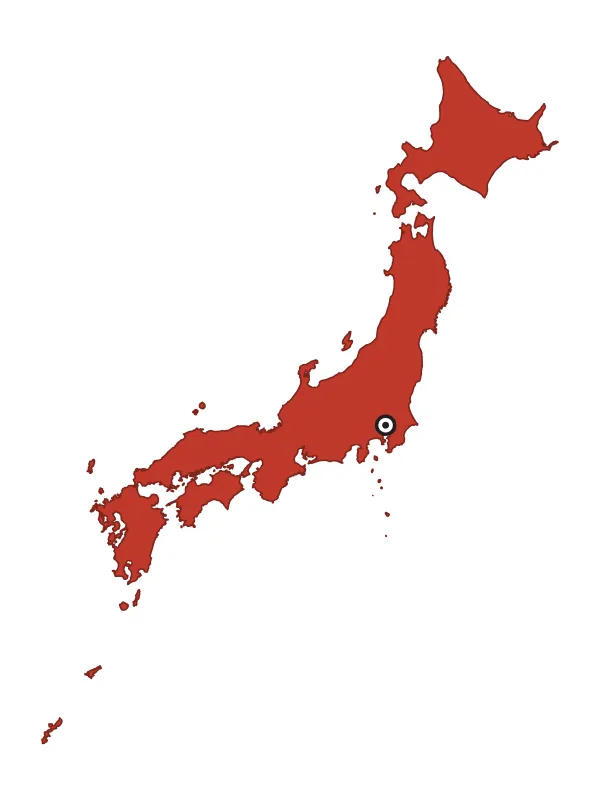
An island nation of samurai, tea ceremonies and bullet trains, where ancient traditions live side by side with the newest technology.
Test yourself
Which came first?
History in brief
Ancient world Jōmon pottery is among the oldest in the world, more than 14,000 years old. Later, rice farmers learned to work iron, and from the 3rd to 6th centuries chiefs built huge keyhole-shaped burial mounds called kofun.
Middle Ages Buddhism came from Korea in the 6th century, and Kyoto became the capital in 794. Around 1000 the court lady Murasaki Shikibu wrote The Tale of Genji, one of the world's first novels, and from the late 12th century shoguns and samurai ruled.
Early modern & modern era In 1603 the Tokugawa shoguns made Edo (Tokyo) their seat, and for over two centuries the country was almost closed to foreigners. Kabuki theatre, ukiyo-e prints and Bashō's haiku flourished, and from 1868 the Meiji reforms rapidly modernised Japan.
Contemporary era In 1964 Japan launched the world's first high-speed train, the Shinkansen, and hosted the Tokyo Olympics. Anime, karaoke, Nintendo and Sony came from here, and more than twenty Japanese scientists have won Nobel Prizes.
Interesting facts
- Japan's imperial family is considered the oldest continuous hereditary monarchy in the world.
- The builder Kongō Gumi was founded in 578 and still builds temples, one of the oldest companies in the world.
- Nintendo was founded in 1889 and started out making hanafuda playing cards.
- A haiku is a poem of just 17 syllables: 5, 7 and 5 again.
- The first Shinkansen trains in 1964 ran between Tokyo and Osaka at up to 210 km/h.
Key moments
- 710Nara becomes Japan's capitalThe country's first permanent capital gave its name to an era, and its ancient temples still stand.
- 794Heian-kyō (Kyoto) becomes the capitalThe city remained Japan's capital for more than a thousand years, until 1869.
- 1008First mention of The Tale of GenjiWritten by the court lady Murasaki Shikibu, it is often called the world's first novel.
- 1192Minamoto no Yoritomo becomes shogunReal power in Japan passed for centuries to military rulers, the shoguns, while the emperor became a figurehead.
- 1281“Divine wind” wrecks the Mongol fleetA typhoon scattered Kublai Khan's armada off Japan, giving rise to the word “kamikaze”.
- 1964Shinkansen bullet train opensTrains running at over 200 km/h linked Tokyo and Osaka on the world's first high-speed rail line.
All dates (21)
Ancient world
- 660 BCLegendary founding of Japan by Emperor JimmuThe date comes from ancient chronicles and is legendary, but Japan still marks National Foundation Day on 11 February.
- 57Han emperor gives a gold seal to the King of NaIt is one of the earliest records of Japan; a farmer found the seal in 1784, and it is now a National Treasure.
- 239Queen Himiko's embassy to ChinaThe ruler of Yamatai sent envoys to the Wei kingdom; Chinese chronicles are the main source about her.
Middle Ages
- 710Nara becomes Japan's capitalThe country's first permanent capital gave its name to an era, and its ancient temples still stand.
- 794Heian-kyō (Kyoto) becomes the capitalThe city remained Japan's capital for more than a thousand years, until 1869.
- 1008First mention of The Tale of GenjiWritten by the court lady Murasaki Shikibu, it is often called the world's first novel.
- 1192Minamoto no Yoritomo becomes shogunReal power in Japan passed for centuries to military rulers, the shoguns, while the emperor became a figurehead.
- 1281“Divine wind” wrecks the Mongol fleetA typhoon scattered Kublai Khan's armada off Japan, giving rise to the word “kamikaze”.
- 1397Shogun Yoshimitsu begins the Golden PavilionThe gold-covered pavilion in Kyoto was built as a villa and became a Zen temple after the shogun's death.
Early modern & modern era
- 1543First Europeans reach JapanPortuguese traders blown off course to the island of Tanegashima introduced firearms to Japan.
- 1600Battle of SekigaharaTokugawa Ieyasu's victory was decisive in ending the age of civil wars and opened the way to a united Japan.
- 1603Tokugawa shogunate beginsTokugawa Ieyasu became shogun, and for over 250 years Japan lived largely at peace, mostly closed off from the world.
- 1853Commodore Perry's Black Ships arrive in JapanAn American squadron sailed into Edo Bay and demanded that Japan open up to trade.
- 1868Meiji RestorationPower returned to the emperor, and within decades Japan became a modern industrial power.
- 1872Japan's first railwayTrains began running between Tokyo's Shimbashi station and Yokohama; 14 October is Railway Day in Japan.
- 1889Meiji ConstitutionJapan received its first constitution and an elected parliament, the Imperial Diet.
Contemporary era
- 1958Tokyo Tower opensThe 333-metre red-and-white TV tower, inspired by the Eiffel Tower, became a symbol of Tokyo.
- 1964Shinkansen bullet train opensTrains running at over 200 km/h linked Tokyo and Osaka on the world's first high-speed rail line.
- 1964Tokyo OlympicsTokyo hosted the first Olympic Games in Asia, and the Shinkansen opened just in time for them.
- 1979Sony Walkman launchedThe pocket cassette player with headphones got the whole world listening to music on the move.
- 1982Compact discs go on saleThe first CD players and discs, developed by Sony and Philips, went on sale in Japan.
5 questions of the day Where was it? Timeline
Eras
- Ancient worldbefore 476 · 178 events
- Middle Ages476–1491 · 206 events
- Early modern & modern era1492–1913 · 251 events
- Contemporary era1914 onwards · 217 events
History of countries
 Afghanistan
 Albania
 Algeria
 Andorra
 Angola
 Antigua and Barbuda
 Argentina
 Armenia
 Australia
 Austria
 Azerbaijan
 Bahamas
 Bahrain
 Bangladesh
 Barbados
 Belarus
 Belgium
 Belize
 Benin
 Bhutan
 Bolivia
 Bosnia and Herzegovina
 Botswana
 Brazil
 Brunei
 Bulgaria
 Burkina Faso
 Burundi
 Cambodia
 Cameroon
 Canada
 Cape Verde
 Central African Republic
 Chad
 Chile
 China
 Colombia
 Comoros
 Costa Rica
 Croatia
 Cuba
 Cyprus
 Czechia
 Denmark
 Djibouti
 Dominica
 Dominican Republic
 DR Congo
 East Timor
 Ecuador
 Egypt
 El Salvador
 Equatorial Guinea
 Eritrea
 Estonia
 Eswatini
 Ethiopia
 Fiji
 Finland
 France
 Gabon
 Gambia
 Georgia
 Germany
 Ghana
 Greece
 Grenada
 Guatemala
 Guinea
 Guinea-Bissau
 Guyana
 Haiti
 Honduras
 Hungary
 Iceland
 India
 Indonesia
 Iran
 Iraq
 Ireland
 Israel
 Italy
 Ivory Coast
 Jamaica
 Japan
 Jordan
 Kazakhstan
 Kenya
 Kiribati
 Kuwait
 Kyrgyzstan
 Laos
 Latvia
 Lebanon
 Lesotho
 Liberia
 Libya
 Liechtenstein
 Lithuania
 Luxembourg
 Madagascar
 Malawi
 Malaysia
 Maldives
 Mali
 Malta
 Marshall Islands
 Mauritania
 Mauritius
 Mexico
 Micronesia
 Moldova
 Monaco
 Mongolia
 Montenegro
 Morocco
 Mozambique
 Myanmar
 Namibia
 Nauru
 Nepal
 Netherlands
 New Zealand
 Nicaragua
 Niger
 Nigeria
 North Korea
 North Macedonia
 Norway
 Oman
 Pakistan
 Palau
 Palestine
 Panama
 Papua New Guinea
 Paraguay
 Peru
 Philippines
 Poland
 Portugal
 Qatar
 Republic of the Congo
 Romania
 Russia
 Rwanda
 Saint Kitts and Nevis
 Saint Lucia
 Saint Vincent and the Grenadines
 Samoa
 San Marino
 São Tomé and Príncipe
 Saudi Arabia
 Senegal
 Serbia
 Seychelles
 Sierra Leone
 Singapore
 Slovakia
 Slovenia
 Solomon Islands
 Somalia
 South Africa
 South Korea
 South Sudan
 Spain
 Sri Lanka
 Sudan
 Suriname
 Sweden
 Switzerland
 Syria
 Tajikistan
 Tanzania
 Thailand
 Togo
 Tonga
 Trinidad and Tobago
 Tunisia
 Turkey
 Turkmenistan
 Tuvalu
 Uganda
 Ukraine
 United Arab Emirates
 United Kingdom
 United States
 Uruguay
 Uzbekistan
 Vanuatu
 Vatican City
 Venezuela
 Vietnam
 Yemen
 Zambia
 Zimbabwe
Spotted a mistake or a disputed fact? Write to us and we will check and fix it: [email protected]