Turkey: history in brief
A bridge between Europe and Asia, home to Troy and the Hittite capital, where Istanbul served as the capital of two great empires.
Test yourself
Which came first?
History in brief
Ancient world The stone pillars of Göbekli Tepe were raised around 9500 BC, thousands of years before Stonehenge. The Hittites ruled from Hattusa, Troy stood here, and in 330 Constantine made Constantinople the new capital of the Roman Empire.
Middle Ages For a thousand years Constantinople was the capital of Byzantium; Hagia Sophia was consecrated in 537. In 1453 Sultan Mehmed II took the city, and it became the capital of the Ottoman Empire.
Early modern & modern era Under Suleiman the Magnificent in the 16th century the architect Sinan built hundreds of mosques, bridges and baths. Ottoman culture gave the world Iznik tiles, coffee houses and the tulips that travelled from here to the Netherlands.
Contemporary era The Republic of Turkey was proclaimed in 1923 with Ankara as its capital; its founder was Atatürk. In 1928 the country switched to the Latin alphabet, and in 2015 chemist Aziz Sancar won the Nobel Prize.
Interesting facts
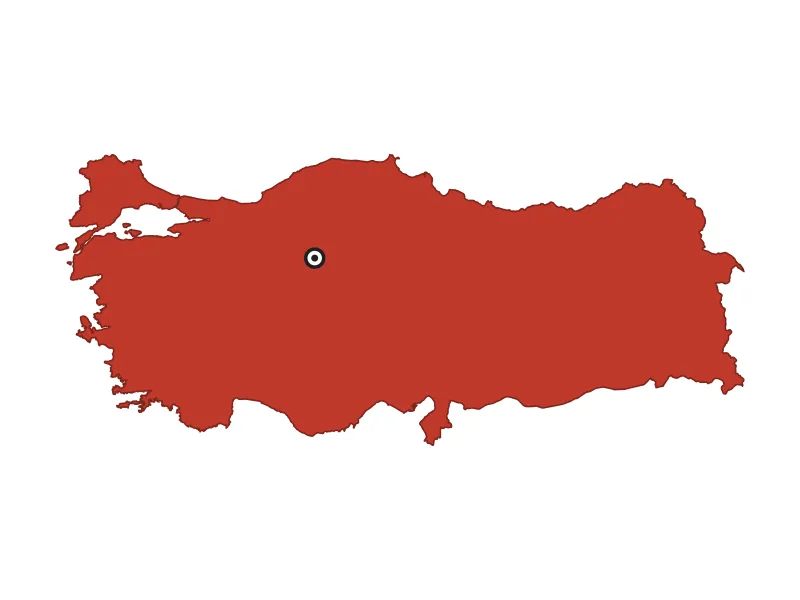
- Göbekli Tepe is the oldest known temple complex, more than 11,000 years old.
- Istanbul lies on two continents at once, Europe and Asia, divided by the Bosphorus strait.
- Hagia Sophia remained the largest church in the world for almost a thousand years.
- Istanbul's Grand Bazaar, built in 1455–1461, is one of the oldest and largest covered markets in the world.
- Troy is not just a legend: its ruins were excavated on the hill of Hisarlik in the 19th century.
Key moments
- 630 BCFirst coins minted in LydiaLydia, in what is now western Turkey, began striking coins of electrum, an alloy of gold and silver; the date is approximate.
- 356 BCHerostratus burns the Temple of Artemis at EphesusThe arsonist craved fame at any cost, hence the phrase "herostratic fame"; legend says Alexander the Great was born that same night.
- 330Constantinople becomes the capitalConstantine moved the capital to ancient Byzantium, and the city remained an imperial capital for over a thousand years.
- 537Hagia Sophia consecratedFor nearly a thousand years it was the largest cathedral in the world, and its vast dome still amazes visitors.
- 1299Ottoman state foundedBy tradition, this is the year Osman I founded the state that grew into a great empire.
- 1453Fall of ConstantinopleSultan Mehmed II captured the Byzantine capital, ending an empire more than a thousand years old.
All dates (22)
Ancient world
- 630 BCFirst coins minted in LydiaLydia, in what is now western Turkey, began striking coins of electrum, an alloy of gold and silver; the date is approximate.
- 585 BCEclipse predicted by ThalesAccording to Herodotus, the solar eclipse of 28 May halted a battle between Lydians and Medes, who then made peace.
- 499 BCIonian RevoltThe Greek cities of Asia Minor rose against Persia, starting the Greco-Persian Wars.
- 356 BCHerostratus burns the Temple of Artemis at EphesusThe arsonist craved fame at any cost, hence the phrase "herostratic fame"; legend says Alexander the Great was born that same night.
- 333 BCBattle of IssusAlexander the Great put the Persian king Darius III to flight and captured his family.
- 53 BCBattle of CarrhaeParthian horse archers crushed the army of Crassus, and the general himself was killed.
- 47 BC"I came, I saw, I conquered": Battle of ZelaCaesar beat King Pharnaces II of Pontus so quickly that he reported the victory in three words.
- 260Shapur I captures Emperor ValerianIt was the first time a Roman emperor was taken prisoner; the scene was carved on the cliffs of Naqsh-e Rostam in Iran.
- 284Diocletian becomes emperorHe ended the third-century crisis and shared power among four rulers in the Tetrarchy.
- 325First Council of NicaeaBishops from across the empire adopted a creed and common rules for setting the date of Easter.
- 330Constantinople becomes the capitalConstantine moved the capital to ancient Byzantium, and the city remained an imperial capital for over a thousand years.
- 378Battle of AdrianopleThe Goths routed the Roman army, and Emperor Valens was killed in the battle.
- 413Theodosian Walls of Constantinople completedThese land walls protected the city for over a thousand years, until the Ottoman conquest in 1453.
Middle Ages
- 527Justinian I becomes emperorUnder him Byzantium won back Italy and North Africa, and his code of laws became a foundation of European law.
- 537Hagia Sophia consecratedFor nearly a thousand years it was the largest cathedral in the world, and its vast dome still amazes visitors.
- 1071Battle of ManzikertThe Seljuks crushed the Byzantines and captured Emperor Romanos IV, opening Anatolia to them.
- 1204Crusaders sack ConstantinopleInstead of reaching the Holy Land, the Fourth Crusade looted the Byzantine capital.
- 1299Ottoman state foundedBy tradition, this is the year Osman I founded the state that grew into a great empire.
- 1453Fall of ConstantinopleSultan Mehmed II captured the Byzantine capital, ending an empire more than a thousand years old.
Early modern & modern era
- 1520Suleiman the Magnificent becomes sultanUnder him the Ottoman Empire reached the height of its power; he ruled for 46 years.
- 1557Süleymaniye Mosque completedThe great architect Sinan completed this Istanbul mosque for Sultan Suleiman the Magnificent.
- 1871Schliemann starts digging for TroyHeinrich Schliemann began large-scale digs at the Hisarlik mound, searching for Homer's Troy.
5 questions of the day Where was it? Timeline
Eras
- Ancient worldbefore 476 · 178 events
- Middle Ages476–1491 · 206 events
- Early modern & modern era1492–1913 · 251 events
- Contemporary era1914 onwards · 217 events
History of countries
 Afghanistan
 Albania
 Algeria
 Andorra
 Angola
 Antigua and Barbuda
 Argentina
 Armenia
 Australia
 Austria
 Azerbaijan
 Bahamas
 Bahrain
 Bangladesh
 Barbados
 Belarus
 Belgium
 Belize
 Benin
 Bhutan
 Bolivia
 Bosnia and Herzegovina
 Botswana
 Brazil
 Brunei
 Bulgaria
 Burkina Faso
 Burundi
 Cambodia
 Cameroon
 Canada
 Cape Verde
 Central African Republic
 Chad
 Chile
 China
 Colombia
 Comoros
 Costa Rica
 Croatia
 Cuba
 Cyprus
 Czechia
 Denmark
 Djibouti
 Dominica
 Dominican Republic
 DR Congo
 East Timor
 Ecuador
 Egypt
 El Salvador
 Equatorial Guinea
 Eritrea
 Estonia
 Eswatini
 Ethiopia
 Fiji
 Finland
 France
 Gabon
 Gambia
 Georgia
 Germany
 Ghana
 Greece
 Grenada
 Guatemala
 Guinea
 Guinea-Bissau
 Guyana
 Haiti
 Honduras
 Hungary
 Iceland
 India
 Indonesia
 Iran
 Iraq
 Ireland
 Israel
 Italy
 Ivory Coast
 Jamaica
 Japan
 Jordan
 Kazakhstan
 Kenya
 Kiribati
 Kuwait
 Kyrgyzstan
 Laos
 Latvia
 Lebanon
 Lesotho
 Liberia
 Libya
 Liechtenstein
 Lithuania
 Luxembourg
 Madagascar
 Malawi
 Malaysia
 Maldives
 Mali
 Malta
 Marshall Islands
 Mauritania
 Mauritius
 Mexico
 Micronesia
 Moldova
 Monaco
 Mongolia
 Montenegro
 Morocco
 Mozambique
 Myanmar
 Namibia
 Nauru
 Nepal
 Netherlands
 New Zealand
 Nicaragua
 Niger
 Nigeria
 North Korea
 North Macedonia
 Norway
 Oman
 Pakistan
 Palau
 Palestine
 Panama
 Papua New Guinea
 Paraguay
 Peru
 Philippines
 Poland
 Portugal
 Qatar
 Republic of the Congo
 Romania
 Russia
 Rwanda
 Saint Kitts and Nevis
 Saint Lucia
 Saint Vincent and the Grenadines
 Samoa
 San Marino
 São Tomé and Príncipe
 Saudi Arabia
 Senegal
 Serbia
 Seychelles
 Sierra Leone
 Singapore
 Slovakia
 Slovenia
 Solomon Islands
 Somalia
 South Africa
 South Korea
 South Sudan
 Spain
 Sri Lanka
 Sudan
 Suriname
 Sweden
 Switzerland
 Syria
 Tajikistan
 Tanzania
 Thailand
 Togo
 Tonga
 Trinidad and Tobago
 Tunisia
 Turkey
 Turkmenistan
 Tuvalu
 Uganda
 Ukraine
 United Arab Emirates
 United Kingdom
 United States
 Uruguay
 Uzbekistan
 Vanuatu
 Vatican City
 Venezuela
 Vietnam
 Yemen
 Zambia
 Zimbabwe
Spotted a mistake or a disputed fact? Write to us and we will check and fix it: [email protected]