Poland: history in brief
The land of Copernicus, Chopin and Marie Skłodowska-Curie, where Europe's first modern constitution was adopted in 1791.
Test yourself
Which came first?
History in brief
Middle Ages In 966 Duke Mieszko I was baptised, the date from which the Polish state is counted. Kraków became the royal capital and got a university in 1364, and in 1410 the Polish-Lithuanian army won at Grunwald.
Early modern & modern era In 1543 Nicolaus Copernicus published his book showing that the Earth moves around the Sun. On 3 May 1791 the Commonwealth adopted its constitution, and in the 19th century the world came to know Chopin's music and Marie Curie's discoveries.
Contemporary era In 1918 Poland regained its independence. Stanisław Lem wrote science fiction, Andrzej Wajda made films, Wisława Szymborska won the Nobel Prize, and climbers Jerzy Kukuczka and Wanda Rutkiewicz conquered the world's highest peaks.
Interesting facts
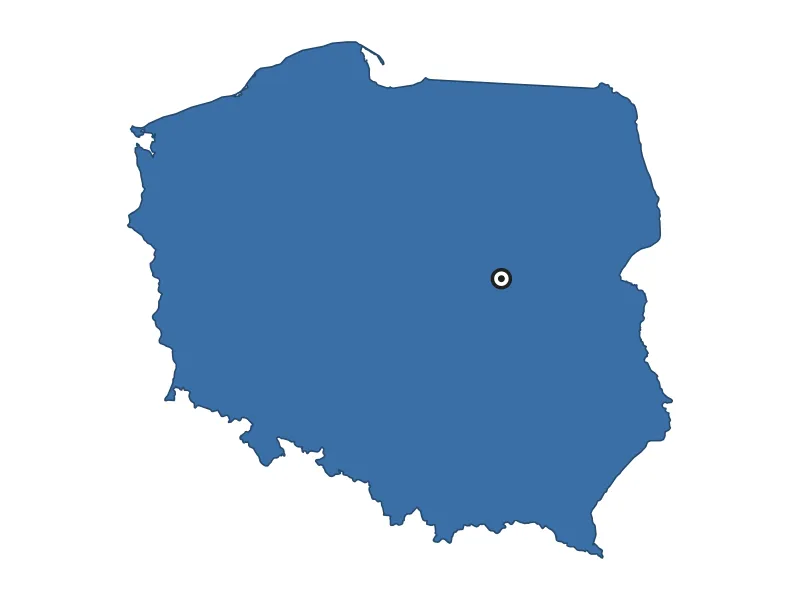
- Salt was mined at Wieliczka from the 13th century; deep underground there is a chapel carved entirely from salt.
- Marie Skłodowska-Curie is the only person to have won Nobel Prizes in two different sciences.
- Chopin left Poland at 20, but at his wish the composer's heart was brought back to Warsaw.
- Malbork is the largest castle in the world by area; it was built by the Teutonic Knights.
- Copernicus was also an economist: in 1526 he described how “bad” money drives out “good”.
Key moments
- 966Baptism of PolandDuke Mieszko I accepted Christianity, an event seen as the beginning of the Polish state.
- 1025Coronation of Bolesław the BraveBolesław I the Brave was crowned in Gniezno, becoming the first King of Poland.
- 1274Malbork Castle begunThe Teutonic Order's fortress became the largest castle in the world by area.
- 1410Battle of GrunwaldThe armies of Poland and the Grand Duchy of Lithuania crushed the Teutonic Order.
- 1473Nicolaus Copernicus bornThe astronomer from Toruń would put the Sun, not the Earth, at the centre of the universe.
- 1543Copernicus puts the Sun at the centreNicolaus Copernicus published On the Revolutions of the Heavenly Spheres, in which the Earth orbits the Sun.
All dates (18)
Ancient world
- 738 BCBiskupin settlement builtThis fortified wooden settlement on a lake peninsula in Poland has been dated by the tree rings in its timbers.
Middle Ages
- 966Baptism of PolandDuke Mieszko I accepted Christianity, an event seen as the beginning of the Polish state.
- 1000Congress of GnieznoEmperor Otto III visited Bolesław the Brave in Gniezno, and Poland gained its own archbishopric.
- 1025Coronation of Bolesław the BraveBolesław I the Brave was crowned in Gniezno, becoming the first King of Poland.
- 1257Kraków receives its town charterDuke Bolesław V the Chaste granted Kraków Magdeburg rights, and its Main Market Square was laid out.
- 1274Malbork Castle begunThe Teutonic Order's fortress became the largest castle in the world by area.
- 1364Kraków Academy foundedKing Casimir III the Great founded what is now the Jagiellonian University, where Copernicus later studied.
- 1410Battle of GrunwaldThe armies of Poland and the Grand Duchy of Lithuania crushed the Teutonic Order.
- 1473Nicolaus Copernicus bornThe astronomer from Toruń would put the Sun, not the Earth, at the centre of the universe.
Early modern & modern era
- 1543Copernicus puts the Sun at the centreNicolaus Copernicus published On the Revolutions of the Heavenly Spheres, in which the Earth orbits the Sun.
- 1569Union of LublinPoland and the Grand Duchy of Lithuania merged into a single state, the Polish–Lithuanian Commonwealth.
- 1596Royal court moves to WarsawKing Sigismund III Vasa began moving the court from Kraków to Warsaw, which became the de facto capital.
- 1644Sigismund's Column erected in WarsawKing Władysław IV raised the column in honour of his father, Sigismund III, who had moved the court to Warsaw.
- 1773Commission of National EducationThe Sejm created what is seen as Europe's first ministry of education; 14 October is Teachers' Day in Poland.
- 1791Poland's Constitution of 3 MayThe Polish–Lithuanian Commonwealth adopted Europe's first modern written constitution.
- 1887Esperanto is bornWarsaw eye doctor Ludwik Zamenhof published a textbook of Esperanto, the international language he created.
Contemporary era
- 1927First International Chopin CompetitionWarsaw held the first International Chopin Piano Competition; it now takes place every five years.
- 1978Kraków and Wieliczka on the first UNESCO listKraków's historic centre and the Wieliczka Salt Mine were among the first 12 World Heritage Sites.
5 questions of the day Where was it? Timeline
Eras
- Ancient worldbefore 476 · 178 events
- Middle Ages476–1491 · 206 events
- Early modern & modern era1492–1913 · 251 events
- Contemporary era1914 onwards · 217 events
History of countries
 Afghanistan
 Albania
 Algeria
 Andorra
 Angola
 Antigua and Barbuda
 Argentina
 Armenia
 Australia
 Austria
 Azerbaijan
 Bahamas
 Bahrain
 Bangladesh
 Barbados
 Belarus
 Belgium
 Belize
 Benin
 Bhutan
 Bolivia
 Bosnia and Herzegovina
 Botswana
 Brazil
 Brunei
 Bulgaria
 Burkina Faso
 Burundi
 Cambodia
 Cameroon
 Canada
 Cape Verde
 Central African Republic
 Chad
 Chile
 China
 Colombia
 Comoros
 Costa Rica
 Croatia
 Cuba
 Cyprus
 Czechia
 Denmark
 Djibouti
 Dominica
 Dominican Republic
 DR Congo
 East Timor
 Ecuador
 Egypt
 El Salvador
 Equatorial Guinea
 Eritrea
 Estonia
 Eswatini
 Ethiopia
 Fiji
 Finland
 France
 Gabon
 Gambia
 Georgia
 Germany
 Ghana
 Greece
 Grenada
 Guatemala
 Guinea
 Guinea-Bissau
 Guyana
 Haiti
 Honduras
 Hungary
 Iceland
 India
 Indonesia
 Iran
 Iraq
 Ireland
 Israel
 Italy
 Ivory Coast
 Jamaica
 Japan
 Jordan
 Kazakhstan
 Kenya
 Kiribati
 Kuwait
 Kyrgyzstan
 Laos
 Latvia
 Lebanon
 Lesotho
 Liberia
 Libya
 Liechtenstein
 Lithuania
 Luxembourg
 Madagascar
 Malawi
 Malaysia
 Maldives
 Mali
 Malta
 Marshall Islands
 Mauritania
 Mauritius
 Mexico
 Micronesia
 Moldova
 Monaco
 Mongolia
 Montenegro
 Morocco
 Mozambique
 Myanmar
 Namibia
 Nauru
 Nepal
 Netherlands
 New Zealand
 Nicaragua
 Niger
 Nigeria
 North Korea
 North Macedonia
 Norway
 Oman
 Pakistan
 Palau
 Palestine
 Panama
 Papua New Guinea
 Paraguay
 Peru
 Philippines
 Poland
 Portugal
 Qatar
 Republic of the Congo
 Romania
 Russia
 Rwanda
 Saint Kitts and Nevis
 Saint Lucia
 Saint Vincent and the Grenadines
 Samoa
 San Marino
 São Tomé and Príncipe
 Saudi Arabia
 Senegal
 Serbia
 Seychelles
 Sierra Leone
 Singapore
 Slovakia
 Slovenia
 Solomon Islands
 Somalia
 South Africa
 South Korea
 South Sudan
 Spain
 Sri Lanka
 Sudan
 Suriname
 Sweden
 Switzerland
 Syria
 Tajikistan
 Tanzania
 Thailand
 Togo
 Tonga
 Trinidad and Tobago
 Tunisia
 Turkey
 Turkmenistan
 Tuvalu
 Uganda
 Ukraine
 United Arab Emirates
 United Kingdom
 United States
 Uruguay
 Uzbekistan
 Vanuatu
 Vatican City
 Venezuela
 Vietnam
 Yemen
 Zambia
 Zimbabwe
Spotted a mistake or a disputed fact? Write to us and we will check and fix it: [email protected]