Greece: history in brief
The birthplace of democracy, philosophy, theatre and the Olympic Games; many words we use every day come from Greek.
Test yourself
Which came first?
History in brief
Ancient world Around 2000 BC the Minoan civilisation flourished on Crete, with its palace at Knossos. The first Olympic Games were held in 776 BC, Athens built the Parthenon in the 5th century BC, and Socrates, Plato and Aristotle laid the foundations of philosophy.
Middle Ages Greek became the language of Byzantium, with its capital at Constantinople. Monks have lived on Mount Athos since the 10th century, monasteries rose on the rocks of Meteora, and Byzantine scholars kept ancient texts alive until the Renaissance.
Early modern & modern era For almost four centuries Greece was part of the Ottoman Empire. The struggle for independence began in 1821, the Greek state was born in 1830, and in 1896 Athens hosted the first modern Olympic Games.
Contemporary era Nikos Kazantzakis wrote Zorba the Greek, Maria Callas became a great opera singer, and the poets Seferis and Elytis won Nobel Prizes. In 2004 Athens hosted the Olympics again, and Greece won the European football championship.
Interesting facts
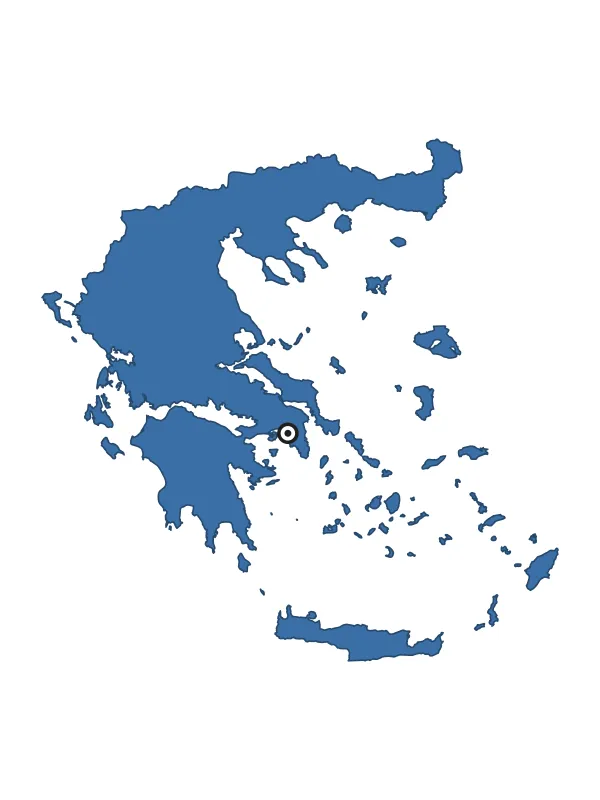
- The words “democracy”, “music”, “theatre” and “history” all come from ancient Greek.
- At every Olympic opening ceremony Greece marches first, honouring the birthplace of the Games.
- The Antikythera mechanism is over 2,000 years old: the oldest known “computer” for tracking the movements of the heavens.
- Greece has about 6,000 islands, yet only around two hundred are inhabited.
- The marathon is named after a town: legend says that in 490 BC a messenger ran from there to Athens with news of victory.
Key moments
- 776 BCFirst recorded Olympic GamesThe Greeks counted Olympiads from this year; the first known champion was a runner named Coroebus.
- 621 BCDraco's laws in AthensAthens' first written laws were so harsh that the word "draconian" is still used today.
- 508 BCCleisthenes' reforms: birth of Athenian democracyCleisthenes gave power to the assembly of citizens, which is why he is called the father of democracy.
- 490 BCBattle of MarathonThe Athenians defeated the Persians; the legend of a runner bringing the news to Athens gave the marathon its name.
- 480 BCBattle of ThermopylaeThe Spartan king Leonidas and a small force held off the huge army of the Persian king Xerxes for three days.
- 447 BCConstruction of the Parthenon beginsThe temple of Athena on the Acropolis was built under Pericles and became a symbol of ancient Greece.
All dates (36)
Ancient world
- 776 BCFirst recorded Olympic GamesThe Greeks counted Olympiads from this year; the first known champion was a runner named Coroebus.
- 621 BCDraco's laws in AthensAthens' first written laws were so harsh that the word "draconian" is still used today.
- 594 BCReforms of SolonThe Athenian archon abolished debt slavery and laid the foundations of later democracy.
- 508 BCCleisthenes' reforms: birth of Athenian democracyCleisthenes gave power to the assembly of citizens, which is why he is called the father of democracy.
- 490 BCBattle of MarathonThe Athenians defeated the Persians; the legend of a runner bringing the news to Athens gave the marathon its name.
- 480 BCBattle of ThermopylaeThe Spartan king Leonidas and a small force held off the huge army of the Persian king Xerxes for three days.
- 479 BCBattle of PlataeaA united Greek army crushed the Persian forces, ending Xerxes' invasion of Greece.
- 478 BCDelian League formedGreek city-states led by Athens allied against Persia; the league's treasury was kept on the island of Delos.
- 472 BCAeschylus stages The PersiansIt is the oldest surviving play in the history of theatre.
- 447 BCConstruction of the Parthenon beginsThe temple of Athena on the Acropolis was built under Pericles and became a symbol of ancient Greece.
- 435 BCPhidias creates the Statue of Zeus at OlympiaThe huge gold-and-ivory statue became one of the Seven Wonders of the World; the date is approximate.
- 431 BCPeloponnesian War beginsAthens and Sparta fought for almost 30 years for supremacy in Greece.
- 404 BCAthens surrenders to SpartaThe Spartan commander Lysander starved Athens into surrender, and the city tore down its Long Walls.
- 399 BCExecution of SocratesAn Athenian court sentenced the philosopher to death, and he drank a cup of hemlock.
- 387 BCPlato founds the AcademyThe philosophical school in Athens lasted for centuries and gave its name to every academy; the date is approximate.
- 371 BCBattle of LeuctraEpaminondas of Thebes defeated the Spartans with his oblique formation, ending Sparta's dominance in Greece.
- 338 BCBattle of ChaeroneaPhilip II of Macedon defeated Athens and Thebes and took control of Greece; the young Alexander led the cavalry.
- 336 BCAlexander the Great becomes kingAfter his father Philip II was assassinated, the 20-year-old Alexander took the throne of Macedon.
- 335 BCAristotle opens the LyceumAlexander the Great's tutor founded a school in Athens whose name lives on in the word "lyceum".
- 280 BCColossus of Rhodes completedThe bronze statue of the sun god Helios, about 33 metres tall, became one of the Seven Wonders of the World.
- 226 BCEarthquake topples the Colossus of RhodesThe statue stood for only about 54 years, yet its remains amazed travellers for centuries.
- 129 BCHipparchus completes his star catalogueWorking on Rhodes, the astronomer charted about 850 stars and discovered precession, the slow shift of Earth's axis.
- 42 BCBattle of PhilippiMark Antony and Octavian defeated Caesar's assassins, Brutus and Cassius.
- 31 BCBattle of ActiumOctavian's fleet defeated Mark Antony and Cleopatra off the coast of Greece.
- 380Edict of ThessalonicaEmperor Theodosius I made Nicene Christianity the state religion of the Roman Empire.
- 393Last ancient Olympic GamesTradition holds that after these games Theodosius I banned pagan festivals; the Olympics returned only in 1896.
Middle Ages
- 963Great Lavra founded on Mount AthosSaint Athanasius the Athonite founded the first great monastery of the Holy Mountain, home to monks for over a thousand years.
Early modern & modern era
- 1571Battle of LepantoThe Holy League fleet defeated the Ottoman navy in the last great galley battle; Cervantes was wounded in it.
- 1821Greek War of Independence beginsThe Greeks rose up against the Ottoman Empire; 25 March is celebrated as Greek Independence Day.
- 1834Athens becomes the capitalKing Otto moved the capital from Nafplio to Athens, then a modest town but famed for its ancient past.
- 1837University of Athens foundedModern Greece's first university opened in the house of architect Stamatios Kleanthis in the old Plaka quarter.
- 1893Corinth Canal opensThe 6.4 km canal cut through the isthmus, separating the Peloponnese from the mainland, a dream since antiquity.
- 1896First modern Olympic GamesRevived by Pierre de Coubertin, the Games were held in Athens; American James Connolly became the first champion.
- 1900Excavation of Knossos beginsArthur Evans began excavating the Minoan palace on Crete linked to the myth of the Minotaur.
Contemporary era
- 2004Athens OlympicsThe Summer Games returned to their homeland; the shot put was held in the ancient stadium at Olympia.
- 2009New Acropolis Museum opensA museum opened below the Acropolis, with glass floors revealing an excavated ancient neighbourhood.
5 questions of the day Where was it? Timeline
Eras
- Ancient worldbefore 476 · 178 events
- Middle Ages476–1491 · 206 events
- Early modern & modern era1492–1913 · 251 events
- Contemporary era1914 onwards · 217 events
History of countries
 Afghanistan
 Albania
 Algeria
 Andorra
 Angola
 Antigua and Barbuda
 Argentina
 Armenia
 Australia
 Austria
 Azerbaijan
 Bahamas
 Bahrain
 Bangladesh
 Barbados
 Belarus
 Belgium
 Belize
 Benin
 Bhutan
 Bolivia
 Bosnia and Herzegovina
 Botswana
 Brazil
 Brunei
 Bulgaria
 Burkina Faso
 Burundi
 Cambodia
 Cameroon
 Canada
 Cape Verde
 Central African Republic
 Chad
 Chile
 China
 Colombia
 Comoros
 Costa Rica
 Croatia
 Cuba
 Cyprus
 Czechia
 Denmark
 Djibouti
 Dominica
 Dominican Republic
 DR Congo
 East Timor
 Ecuador
 Egypt
 El Salvador
 Equatorial Guinea
 Eritrea
 Estonia
 Eswatini
 Ethiopia
 Fiji
 Finland
 France
 Gabon
 Gambia
 Georgia
 Germany
 Ghana
 Greece
 Grenada
 Guatemala
 Guinea
 Guinea-Bissau
 Guyana
 Haiti
 Honduras
 Hungary
 Iceland
 India
 Indonesia
 Iran
 Iraq
 Ireland
 Israel
 Italy
 Ivory Coast
 Jamaica
 Japan
 Jordan
 Kazakhstan
 Kenya
 Kiribati
 Kuwait
 Kyrgyzstan
 Laos
 Latvia
 Lebanon
 Lesotho
 Liberia
 Libya
 Liechtenstein
 Lithuania
 Luxembourg
 Madagascar
 Malawi
 Malaysia
 Maldives
 Mali
 Malta
 Marshall Islands
 Mauritania
 Mauritius
 Mexico
 Micronesia
 Moldova
 Monaco
 Mongolia
 Montenegro
 Morocco
 Mozambique
 Myanmar
 Namibia
 Nauru
 Nepal
 Netherlands
 New Zealand
 Nicaragua
 Niger
 Nigeria
 North Korea
 North Macedonia
 Norway
 Oman
 Pakistan
 Palau
 Palestine
 Panama
 Papua New Guinea
 Paraguay
 Peru
 Philippines
 Poland
 Portugal
 Qatar
 Republic of the Congo
 Romania
 Russia
 Rwanda
 Saint Kitts and Nevis
 Saint Lucia
 Saint Vincent and the Grenadines
 Samoa
 San Marino
 São Tomé and Príncipe
 Saudi Arabia
 Senegal
 Serbia
 Seychelles
 Sierra Leone
 Singapore
 Slovakia
 Slovenia
 Solomon Islands
 Somalia
 South Africa
 South Korea
 South Sudan
 Spain
 Sri Lanka
 Sudan
 Suriname
 Sweden
 Switzerland
 Syria
 Tajikistan
 Tanzania
 Thailand
 Togo
 Tonga
 Trinidad and Tobago
 Tunisia
 Turkey
 Turkmenistan
 Tuvalu
 Uganda
 Ukraine
 United Arab Emirates
 United Kingdom
 United States
 Uruguay
 Uzbekistan
 Vanuatu
 Vatican City
 Venezuela
 Vietnam
 Yemen
 Zambia
 Zimbabwe
Spotted a mistake or a disputed fact? Write to us and we will check and fix it: [email protected]