United Kingdom: history in brief
An island nation that gave the world parliament, the steam locomotive, football and Shakespeare's plays.
Test yourself
Which came first?
History in brief
Ancient world Around 2500 BC the great stone circle of Stonehenge was raised. Rome conquered Britain in AD 43, and around 122 Emperor Hadrian began a wall across the island; its remains still stand today.
Middle Ages In 1066 William the Conqueror won at Hastings and became King of England. In 1215 King John sealed Magna Carta, which limited royal power, and Oxford became one of Europe's first universities.
Early modern & modern era Shakespeare wrote his plays around 1600, and in 1687 Newton set out the laws of motion. England and Scotland united in 1707, and the Industrial Revolution followed: steam engines, factories and, in 1825, the first public railway.
Contemporary era In 1928 Alexander Fleming discovered penicillin, and in 1953 the structure of DNA was solved in Cambridge. The Beatles conquered the world, and in 1989 Briton Tim Berners-Lee invented the World Wide Web.
Interesting facts
- The first common rules of football were adopted by the Football Association in London in 1863.
- Big Ben is the name of the bell, not the tower; since 2012 the tower itself has been called the Elizabeth Tower.
- The London Underground opened in 1863, the first underground railway in the world.
- In 1926 Scotsman John Logie Baird gave the first public demonstration of working television in London.
- Since 1884 the prime meridian, from which longitude is counted, has run through Greenwich in London.
Key moments
- 122Construction of Hadrian's Wall beginsThe wall, about 117 km long, crossed northern Britain and marked the empire's frontier.
- 793Viking raid on LindisfarneThe sacking of this island monastery in England is seen as the start of the Viking Age.
- 1066Battle of HastingsWilliam the Conqueror defeated King Harold II and became the first Norman king of England.
- 1078Building of the Tower of London beginsBy tradition, this is when William the Conqueror began the White Tower, the heart of the Tower of London.
- 1215Magna Carta sealedKing John accepted for the first time that even the monarch was subject to the law.
- 1305Execution of William WallaceThe leader of Scotland's fight for independence was executed in London; he later became the hero of Braveheart.
All dates (63)
Ancient world
- 55 BCCaesar's first expedition to BritainRoman legions landed on the island for the first time, though the conquest of Britain began only a century later.
- 43Roman conquest of Britain beginsEmperor Claudius sent legions to the island, and Britain became a Roman province for almost four centuries.
- 122Construction of Hadrian's Wall beginsThe wall, about 117 km long, crossed northern Britain and marked the empire's frontier.
- 142Construction of the Antonine Wall beginsThe new wall in Scotland pushed the frontier north, but about 20 years later the Romans fell back to Hadrian's Wall.
- 306Constantine proclaimed emperor at YorkSoldiers hailed him emperor after his father died in Britain; he would later be known as Constantine the Great.
Middle Ages
- 793Viking raid on LindisfarneThe sacking of this island monastery in England is seen as the start of the Viking Age.
- 1065Westminster Abbey consecratedBuilt by Edward the Confessor, it has hosted the coronations of English monarchs since 1066.
- 1066Battle of HastingsWilliam the Conqueror defeated King Harold II and became the first Norman king of England.
- 1078Building of the Tower of London beginsBy tradition, this is when William the Conqueror began the White Tower, the heart of the Tower of London.
- 1086Domesday Book compiledWilliam the Conqueror ordered a survey of all the land, people and livestock of England.
- 1209University of Cambridge foundedIt was founded by scholars who left Oxford after a clash with the townspeople.
- 1215Magna Carta sealedKing John accepted for the first time that even the monarch was subject to the law.
- 1305Execution of William WallaceThe leader of Scotland's fight for independence was executed in London; he later became the hero of Braveheart.
- 1314Battle of BannockburnScotland's King Robert the Bruce defeated the English and secured Scottish independence.
- 1381Peasants' RevoltEnglish peasants led by Wat Tyler rose against taxes and even took control of London.
- 1457Scottish king bans golfJames II banned golf and football as distractions from archery practice — one of the earliest records of golf.
- 1485Battle of Bosworth FieldThe death of Richard III effectively ended the Wars of the Roses and brought the Tudors to the throne.
Early modern & modern era
- 1534Church of England breaks with RomeUnder the Act of Supremacy, King Henry VIII became head of the Church in England.
- 1599Shakespeare's Globe Theatre opensWilliam Shakespeare's company opened its London theatre, where many of his plays were first staged.
- 1600East India Company foundedQueen Elizabeth I granted English merchants a charter to trade with Asia; the company later ruled much of India.
- 1649Execution of Charles IAfter a civil war the English king was executed, and the country became a republic for 11 years.
- 1666Great Fire of LondonThe fire destroyed much of old London; Christopher Wren later rebuilt St Paul's Cathedral and many churches.
- 1675Royal Observatory, Greenwich foundedFounded by Charles II, it lies on the prime meridian, the zero line for longitude and the world's time zones.
- 1687Newton publishes the law of gravitationIn the Principia, Isaac Newton set out his laws of motion and universal gravitation.
- 1707Kingdom of Great Britain formedThe Acts of Union joined the kingdoms of England and Scotland into one state with a single parliament.
- 1712Newcomen's steam engineThomas Newcomen built the first practical steam engine, used to pump water out of English mines.
- 1719Robinson Crusoe publishedDaniel Defoe told the story of a sailor who spent 28 years on a desert island.
- 1753British Museum foundedBuilt on the collection of physician Hans Sloane, it was one of the world's first public national museums.
- 1769James Watt patents his steam engineJames Watt patented the separate condenser, making steam engines far more efficient and powering the Industrial Revolution.
- 1781Herschel discovers UranusFrom his garden in Bath, William Herschel spotted a new planet, the first one found with a telescope.
- 1796Jenner's first smallpox vaccinationEdward Jenner gave a boy cowpox to protect him from smallpox, and vaccination was born.
- 1813Pride and Prejudice publishedJane Austen's novel about Elizabeth Bennet and Mr Darcy was published without her name on it.
- 1825First public steam railway opensGeorge Stephenson's Locomotion ran between Stockton and Darlington on the first public steam railway.
- 1831Faraday discovers electromagnetic inductionMichael Faraday showed that a moving magnet creates electric current, the principle behind power stations.
- 1840Penny Black, the first postage stampBritain issued the Penny Black, bearing Queen Victoria's profile.
- 1848The Communist Manifesto publishedKarl Marx and Friedrich Engels published in London a pamphlet that shaped the politics of the 20th century.
- 1851Great Exhibition in the Crystal PalaceLondon hosted the first world's fair; its glass-and-iron hall amazed visitors.
- 1859Big Ben first rings outThe clock on the tower of the Palace of Westminster started; Big Ben is the name of its great bell.
- 1859Darwin publishes On the Origin of SpeciesCharles Darwin explained how living things change over time through natural selection.
- 1863The Football Association is foundedClubs meeting in a London tavern agreed common rules, separating football from rugby.
- 1863World's first metro opens in LondonA roughly 6 km underground line linked Paddington and Farringdon in London, with trains pulled by steam locomotives.
- 1865Alice's Adventures in Wonderland publishedOxford mathematician Charles Dodgson, writing as Lewis Carroll, created the tale for a girl named Alice Liddell.
- 1867Lister introduces antiseptic surgerySurgeon Joseph Lister began cleaning wounds and tools with carbolic acid, and far fewer patients died after operations.
- 1872First international football matchScotland and England drew 0–0 in Glasgow.
- 1877First Wimbledon ChampionshipsThe world's oldest tennis tournament began with men's singles only; Spencer Gore won.
- 1894Tower Bridge opensThe bascule bridge over the Thames lets big ships pass and became a symbol of London.
Contemporary era
- 1926First public demonstration of televisionIn London, Scottish inventor John Logie Baird showed scientists moving images on a screen.
- 1928Discovery of penicillinIn London, Alexander Fleming noticed that a mould killed bacteria, which led to the first antibiotic.
- 1937Tolkien's The Hobbit publishedOxford professor J. R. R. Tolkien published the tale of Bilbo Baggins, first told to his own children.
- 1953Structure of DNA discoveredIn Cambridge, James Watson and Francis Crick described DNA's double helix, drawing on Rosalind Franklin's X-ray images.
- 1954First sub-four-minute mileBritish medical student Roger Bannister ran a mile in 3 minutes 59.4 seconds.
- 1954The Lord of the Rings first volume publishedJ. R. R. Tolkien's The Fellowship of the Ring came out; the last volume of the trilogy followed in 1955.
- 1962The Beatles' first singleThe Liverpool band released “Love Me Do”, the start of their road to world fame.
- 1962First James Bond filmSean Connery played agent 007 in Dr. No, based on Ian Fleming's novel.
- 1966England win the World CupAt their home tournament, England beat West Germany 4–2 in the final at Wembley.
- 1967First cash machineThe first cash machine began working outside a Barclays branch in Enfield, north London.
- 1974ABBA win Eurovision with “Waterloo”The Swedish quartet won the contest in Brighton, England, and went on to world fame.
- 1975Queen release “Bohemian Rhapsody”The six-minute song mixing ballad, opera and hard rock became one of the most famous ever recorded.
- 1978Birth of the first IVF babyLouise Brown was born in England, the first person conceived through in vitro fertilisation.
- 1992First text messageIn Britain, an engineer sent the words “Merry Christmas” from a computer to a Vodafone employee's phone.
- 1996Birth of Dolly the sheepDolly was born in Scotland, the first mammal cloned from an adult cell.
- 1997First Harry Potter bookJ. K. Rowling's Harry Potter and the Philosopher's Stone came out, starting the best-selling book series in history.
- 2012London OlympicsLondon became the first city to host the Summer Olympics for a third time.
5 questions of the day Where was it? Timeline
Eras
- Ancient worldbefore 476 · 178 events
- Middle Ages476–1491 · 206 events
- Early modern & modern era1492–1913 · 251 events
- Contemporary era1914 onwards · 217 events
History of countries
 Afghanistan
 Albania
 Algeria
 Andorra
 Angola
 Antigua and Barbuda
 Argentina
 Armenia
 Australia
 Austria
 Azerbaijan
 Bahamas
 Bahrain
 Bangladesh
 Barbados
 Belarus
 Belgium
 Belize
 Benin
 Bhutan
 Bolivia
 Bosnia and Herzegovina
 Botswana
 Brazil
 Brunei
 Bulgaria
 Burkina Faso
 Burundi
 Cambodia
 Cameroon
 Canada
 Cape Verde
 Central African Republic
 Chad
 Chile
 China
 Colombia
 Comoros
 Costa Rica
 Croatia
 Cuba
 Cyprus
 Czechia
 Denmark
 Djibouti
 Dominica
 Dominican Republic
 DR Congo
 East Timor
 Ecuador
 Egypt
 El Salvador
 Equatorial Guinea
 Eritrea
 Estonia
 Eswatini
 Ethiopia
 Fiji
 Finland
 France
 Gabon
 Gambia
 Georgia
 Germany
 Ghana
 Greece
 Grenada
 Guatemala
 Guinea
 Guinea-Bissau
 Guyana
 Haiti
 Honduras
 Hungary
 Iceland
 India
 Indonesia
 Iran
 Iraq
 Ireland
 Israel
 Italy
 Ivory Coast
 Jamaica
 Japan
 Jordan
 Kazakhstan
 Kenya
 Kiribati
 Kuwait
 Kyrgyzstan
 Laos
 Latvia
 Lebanon
 Lesotho
 Liberia
 Libya
 Liechtenstein
 Lithuania
 Luxembourg
 Madagascar
 Malawi
 Malaysia
 Maldives
 Mali
 Malta
 Marshall Islands
 Mauritania
 Mauritius
 Mexico
 Micronesia
 Moldova
 Monaco
 Mongolia
 Montenegro
 Morocco
 Mozambique
 Myanmar
 Namibia
 Nauru
 Nepal
 Netherlands
 New Zealand
 Nicaragua
 Niger
 Nigeria
 North Korea
 North Macedonia
 Norway
 Oman
 Pakistan
 Palau
 Palestine
 Panama
 Papua New Guinea
 Paraguay
 Peru
 Philippines
 Poland
 Portugal
 Qatar
 Republic of the Congo
 Romania
 Russia
 Rwanda
 Saint Kitts and Nevis
 Saint Lucia
 Saint Vincent and the Grenadines
 Samoa
 San Marino
 São Tomé and Príncipe
 Saudi Arabia
 Senegal
 Serbia
 Seychelles
 Sierra Leone
 Singapore
 Slovakia
 Slovenia
 Solomon Islands
 Somalia
 South Africa
 South Korea
 South Sudan
 Spain
 Sri Lanka
 Sudan
 Suriname
 Sweden
 Switzerland
 Syria
 Tajikistan
 Tanzania
 Thailand
 Togo
 Tonga
 Trinidad and Tobago
 Tunisia
 Turkey
 Turkmenistan
 Tuvalu
 Uganda
 Ukraine
 United Arab Emirates
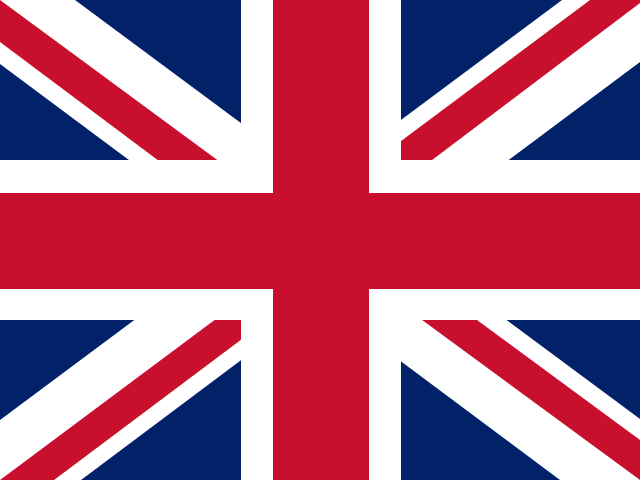 United Kingdom
 United States
 Uruguay
 Uzbekistan
 Vanuatu
 Vatican City
 Venezuela
 Vietnam
 Yemen
 Zambia
 Zimbabwe
Spotted a mistake or a disputed fact? Write to us and we will check and fix it: [email protected]